Seal the Biggest Source of Energy Loss
Attic Spray Foam Insulation in Elrod for homes with high cooling costs, ice dams, or uncomfortable upper floors
Bryars Spray Foam, LLC. installs attic spray foam insulation for residential and commercial property owners across west-central Alabama who need to stop heat gain and energy loss through the roof assembly. Attics without proper insulation and air sealing become heat traps in summer and cold zones in winter, forcing HVAC systems to run constantly without maintaining comfortable indoor temperatures. You may notice upper-floor rooms that stay warmer than the rest of the house, high utility bills during cooling season, or ductwork that sweats and drips in the attic.
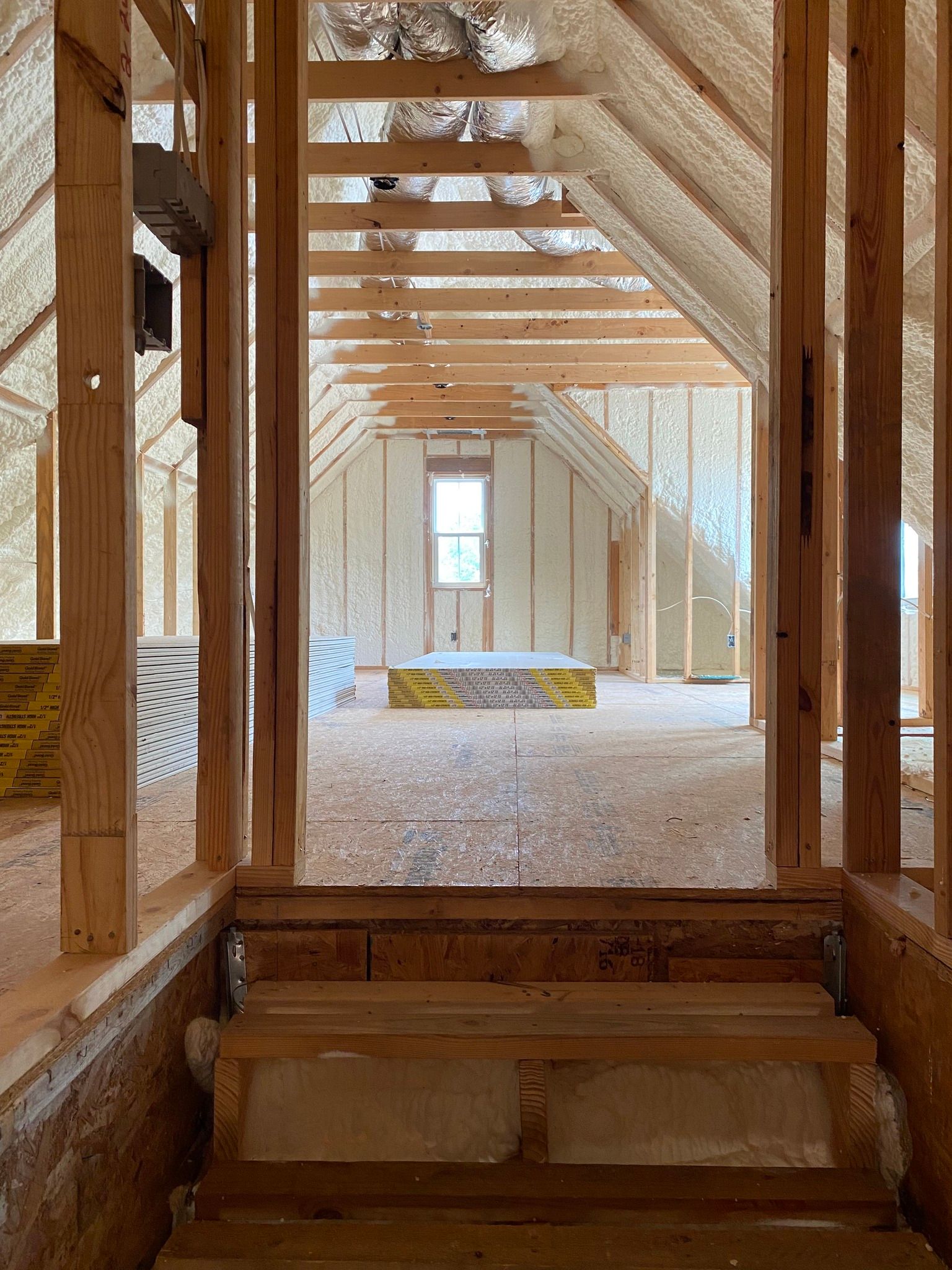
Spray foam insulation creates an air-sealed barrier along the roof deck, stopping outside heat from radiating into the attic and preventing conditioned air from escaping through gaps and cracks. In west-central Alabama, where summer temperatures regularly exceed ninety degrees and attics can reach one hundred fifty degrees or more, sealing the roof deck reduces the thermal load on cooling systems and makes upper floors more comfortable. The foam also protects ductwork and mechanical equipment located in the attic by keeping the space closer to indoor temperature.
If your attic feels like an oven in summer or your cooling bills seem excessive, attic spray foam insulation may be the upgrade your home needs in Elrod.
How Attic Insulation Reduces HVAC Workload
Technicians apply closed-cell spray foam directly to the underside of the roof sheathing, creating a continuous insulating layer that stops radiant heat transfer and air movement. The foam expands to fill gaps around rafters, ridges, and penetrations, sealing the attic from outside air and preventing the stack effect that pulls conditioned air out of living spaces. Bryars Spray Foam uses application techniques that ensure even coverage and proper thickness, meeting or exceeding local building codes for thermal resistance.
Once the insulation is in place, you will notice the attic stays cooler in summer and warmer in winter, with temperatures much closer to the rest of the house. Upper-floor rooms become easier to cool, and your air conditioning system cycles less often because it no longer has to overcome the heat radiating down from an overheated attic. Ductwork located in the attic operates more efficiently, with less energy lost through duct walls and fewer problems with condensation and mold growth on duct surfaces.
The company brings twelve years of insulation installation experience to attic upgrade projects and works with both new construction and retrofit applications. Attic spray foam does not include roof repairs, ventilation modifications, or electrical work, though proper ventilation is typically not needed after the attic is sealed and conditioned. Homeowners should address roof leaks and structural issues before insulation is applied to prevent moisture problems and ensure the foam adheres properly to clean, dry surfaces.
Questions About Sealing the Roof Deck
Property owners in Elrod often ask how attic spray foam differs from traditional insulation and what changes they can expect after installation.
What makes spray foam more effective than fiberglass batts in an attic?
Spray foam seals air leaks and blocks radiant heat, while fiberglass only slows conductive heat transfer and does nothing to stop air movement or heat radiating through the roof deck.
How does spray foam affect attic ventilation requirements?
Once the roof deck is insulated and sealed, the attic becomes a conditioned space and ventilation is no longer necessary, though local building codes should be reviewed before closing vents.
Why do attics in west-central Alabama get so hot in summer?
Dark roofing materials absorb solar radiation and heat the roof sheathing, which radiates heat into the attic space, often raising temperatures fifty to seventy degrees above outdoor air temperature.
When should I upgrade attic insulation instead of adding more fiberglass?
You should consider spray foam when upper floors are uncomfortable, cooling costs are high, or your attic contains HVAC equipment and ductwork that would benefit from a conditioned environment.
How long does attic spray foam installation take for a typical home?
Most residential attics are completed in one day, though larger homes or attics with complex framing and multiple penetrations may require additional time.
Free estimates from Bryars Spray Foam help homeowners evaluate the benefits of upgrading attic insulation and understand how spray foam will improve comfort and energy performance. If your attic radiates heat into your living space or your cooling system struggles to keep up, a site assessment can show whether spray foam is the right solution.